SKU: 37543873209
poisonous money plant

poisonous money plant Money Tree (Pachira aquatica) – Wild Lark

Sale price$20.04 Regular price$22.27
Save 10%

Shipping Estimate
USA
  • USA
  • CAN

Ships within 48 hours · Estimated delivery Jul 14 - Jul 19

Promo Codes Available:

For Your Every Summer RSVP, with Code: SUMMER15

Description

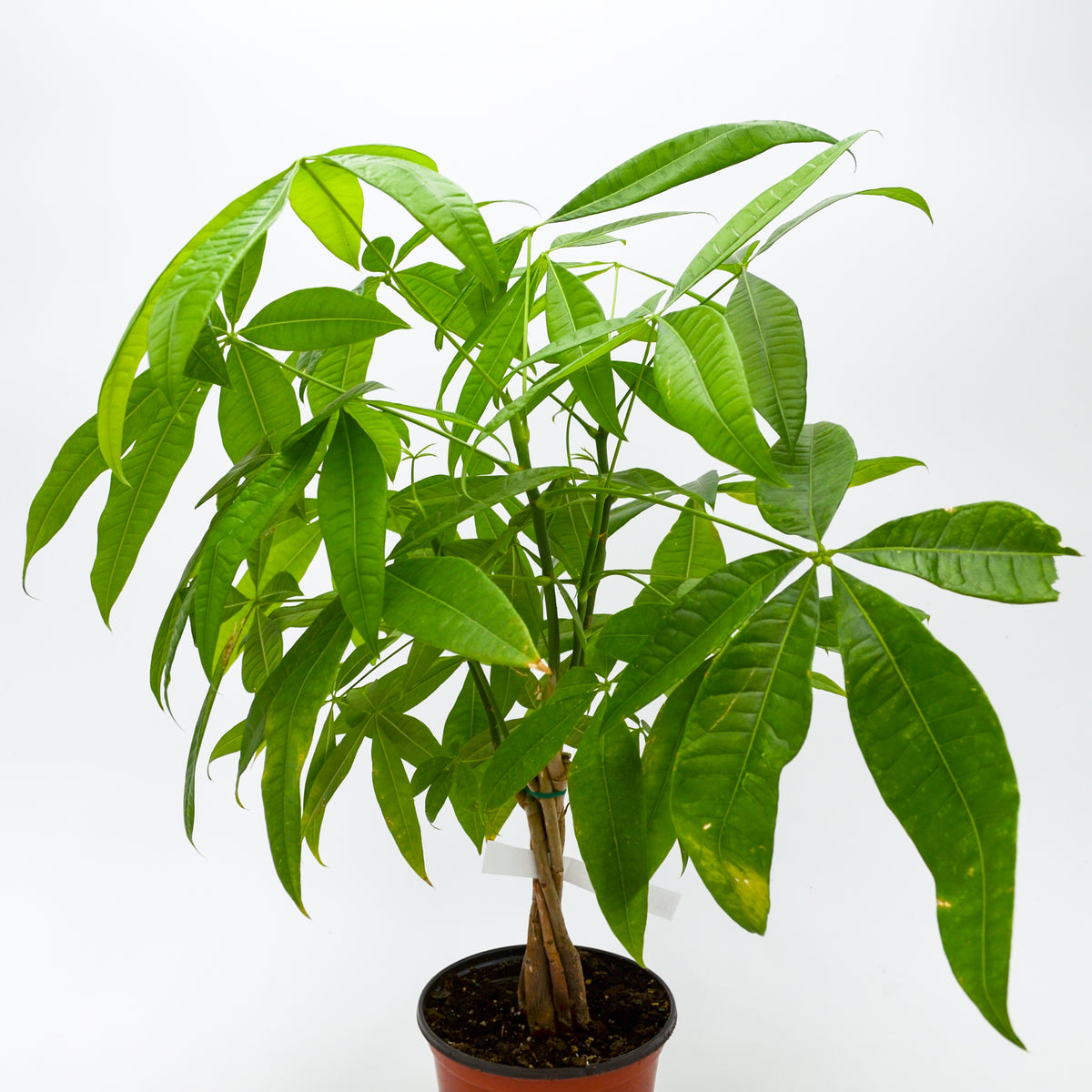
poisonous money plant Money Tree (Pachira aquatica) – Wild LarkMoney Tree (Pachira aquatica), also known as Guiana Chestnut or Malabar Chestnut, is a popular houseplant believed to bring good fortune and prosperity. Native to Central and South America, it is characterized by its braided trunk and lush, green leaves. Money Trees are relatively easy to care for, making them an excellent choice for beginner and experienced plant enthusiasts alike. Money Tree Care Instructions: Light: Place your Money Tree in a

Money Tree (Pachira aquatica), also known as Guiana Chestnut or Malabar Chestnut, is a popular houseplant believed to bring good fortune and prosperity. Native to Central and South America, it is characterized by its braided trunk and lush, green leaves. Money Trees are relatively easy to care for, making them an excellent choice for beginner and experienced plant enthusiasts alike.

Money Tree Care Instructions:

  1. Light: Place your Money Tree in a location with bright, indirect light. It can tolerate lower light conditions, but growth may be slower. Avoid direct sunlight, as it can scorch the leaves.

  2. Water: Water your Money Tree when the top 1-2 inches of soil feel dry to the touch. Ensure the soil is well-draining to prevent waterlogging and root rot. Be cautious not to overwater, as this can lead to root rot.

  3. Humidity: Money Trees prefer moderate humidity levels. To increase humidity, place a tray filled with water and pebbles underneath the pot, mist the leaves occasionally, or use a humidifier.

  4. Temperature: Maintain a temperature range of 65-80°F (18-27°C) for optimal growth. Money Trees can tolerate a range of temperatures but avoid exposing them to temperatures below 50°F (10°C) or sudden temperature changes.

  5. Fertilizer: Feed your Money Tree with a balanced liquid fertilizer every 4-6 weeks during the growing season (spring and summer). Use a half-strength solution to avoid over-fertilizing. Reduce feeding to once every 2-3 months during fall and winter.

  6. Pruning: Prune your Money Tree as needed to maintain its shape and size. Remove any yellow or brown leaves and trim the tips if they become damaged. You can also pinch back the growing tips to encourage bushier growth.

  7. Repotting: Repot your Money Tree every 2-3 years or when the roots outgrow the pot. Choose a well-draining potting mix and a pot that is 1-2 inches larger in diameter than the current one. Be gentle when handling the roots, and water the plant thoroughly after repotting.

Pet-friendly or toxic to pets?

According to the ASPCA, Money Tree (Pachira aquatica) is non-toxic to cats and dogs. This plant is considered pet-friendly, making it a suitable choice for households with pets that may be prone to chewing on plants. However, it's always best to discourage your pets from chewing on plants, as even non-toxic plants can cause mild digestive upset if ingested in large quantities. If you have concerns about your pet's health, contact your veterinarian.

Shipping Notes
  • Free Standard Shipping on $100+ Orders to the USA.
  • Except Preorder products are shipped in 48 hours.
  • Delivery to the USA:
  1. Standard Shipping : 3-10 business days
  • If time is of the essence, please consider selecting expedited delivery for faster service.
Exchange/Return Notes
  • We offer a 30-day return/exchange service after receiving.
  • Final sale items are not eligible for returns or exchanges.
  • To process your return/exchange, please contact us at [email protected]
  • Please click here for more details>>> Return & Exchange Policy
SKU: 37543873209

Discover Niche Categories That Outsell poisonous money plant

Top-Converting Item to Boost Your Average Order

4.2 ★★★★★
Based on 1172 reviews
Sort
Highest Rating
Newest First
Oldest First
Product Reviews
J
Verified Purchase
james p. whitters III
Battle Creek, US
★★★★★ 5
Excellent!
Format: Paperback
Excellent read!
WAS THIS REVIEW HELPFUL?YesReportShare
Reviewed in the United States on October 5, 2025
B
Big Pumpkin
Lowell, US
★★★★★ 1
A Disconnected and Legally Shaky Defense of Racial Preferences
Format: Paperback
While this book raises some thought-provoking points, it ultimately reads like a product of self-righteous elites disconnected from reality and from the American public. 1. Ignores public opinion. The author never acknowledges that polls consistently show Americans oppose racial preferences in college admissions. Proposition 16—which would have allowed such preferences—was defeated by a wide margin in 2020 in California, one of the nation’s most liberal states. A Brookings poll found that virtually all racial groups, including Black respondents, supported the Supreme Court’s Students for Fair Admissions (SFFA) decision. 2. Starts with a strange premise. The first chapter claims conservatives will “regret” the SFFA ruling because universities will continue racial preferences covertly. But that sidesteps the real question: why shouldn’t colleges comply with the ruling’s letter and spirit? 3. Offers dubious legal advice. In Chapter Three, the author—himself a law professor—floats risky ideas for “working around” the Supreme Court’s decision. Many of these suggestions rest on shaky legal ground, as anyone familiar with the Second Circuit’s CACAGNY v. Adams, 116 F.4th 161 (2d Cir. 2024), would recognize. 4. Ignores proportionality and real-world outcomes. The book argues for “diversity” preferences without asking how much preference is justified. In reality, Asian American applicants face steep penalties. e.g. Stanley Zhong was rejected by five University of California campuses’ Computer Science programs as an in-state applicant—shortly before Google hired him for a full-time, Ph.D.-level software engineering position. Meanwhile, UC San Diego’s own freshman math-placement data show a surge of students—mostly “underrepresented minorities” favored by UC—placed into remedial courses, some testing at a 4th-grade level. It is hard to see how admitting these students is helping them other than allowing some elites to make themselves feel good or get a promotion. If this book represents what passes for legal scholarship at Yale, the state of American legal education should worry us all.
WAS THIS REVIEW HELPFUL?YesReportShare
Reviewed in the United States on October 12, 2025
J
Jason Galbraith
Dallas, US
★★★★★ 5
Adherence to the Rule of Law Must Not Become a Fair Weather Sport
Format: Paperback
The memorable quotation I have used for the title of this review comes from the second chapter (I think) of "The Fall of Affirmative Action." What is actually happening in the United States is that the law is being enforced rigorously against "enemy" institutions such as those of higher learning and not at all against those with power, money, or affinity for same. The author, an African-American Yale Law professor, devotes his first chapter to the ways in which conservatives might critique the SCOTUS precedent that ended affirmative action and his second to the ways in which liberals might critique it. His most invaluable contribution to the debate is that civil rights can be advocated from an anti-classification standpoint or an anti-subordination standpoint, with anti-subordinationists on both sides of the affirmative action debate. This forced me to take perhaps a harder look at my own beliefs than most books or articles about affirmative action. African-Americans are certainly subordinated in reality by being excluded from higher education but they are subordinated mostly in the minds of white Americans by the fact that a white applicant with the same scores, extracurriculars and admission essays might not get in. That at least is the conclusion I have come to. "Students for Fair Admissions," the organization that brought down affirmative action before SCOTUS, has now sued those few elite educational institutions that DIDN'T see sharp drops in their African-American enrollment. One strongly suspects that SFFA if not the "Justices" they persuaded will be happy only with a formal quota for African-Americans which is half or less their proportion in the population of the state where the institution is located.
WAS THIS REVIEW HELPFUL?YesReportShare
Reviewed in the United States on November 4, 2025
A
Amy Sullivan
Charlottesville, US
★★★★★ 5
Provocative and fascinating read
Format: Paperback
Justin Driver's excellent book makes the case that conservatives may come to regret the Supreme Court's 2023 decision striking down affirmative action in college admissions. He argues that, rather than simply check a box to indicate their race, the decision will force non-white applicants to "perform their trauma" in application essays in ways that conservatives may find even more corrosive. And affluent non-white candidates--the people conservatives say should not be benefiting from affirmative action--will be the ones best-positioned to take advantage of the opportunity, since they are most equipped to exploit the loopholes and work-arounds that the Roberts decision created. A truly provocative read.
WAS THIS REVIEW HELPFUL?YesReportShare
Reviewed in the United States on October 1, 2025
K
Kindle Customer
Lowell, US
★★★★★ 5
A Powerful and Timely Book about Fairness and Equality in America
Format: Kindle
This book is beautifully written and deeply engaging. As a non-lawyer, I appreciated the author's ability to cut through legal abstraction to reveal what is truly at stake as the Supreme Court turns away from policies designed to expand opportunity. Driver writes, with clarity and conviction, that genuine equality demands more than the pretense that race no longer matters. The result is a powerful and thought-provoking work that reminds us the pursuit of fairness in America remains unfinished.
WAS THIS REVIEW HELPFUL?YesReportShare
Reviewed in the United States on October 5, 2025

recommand products